Referee Signals explained in plain English for parents learning Softball.
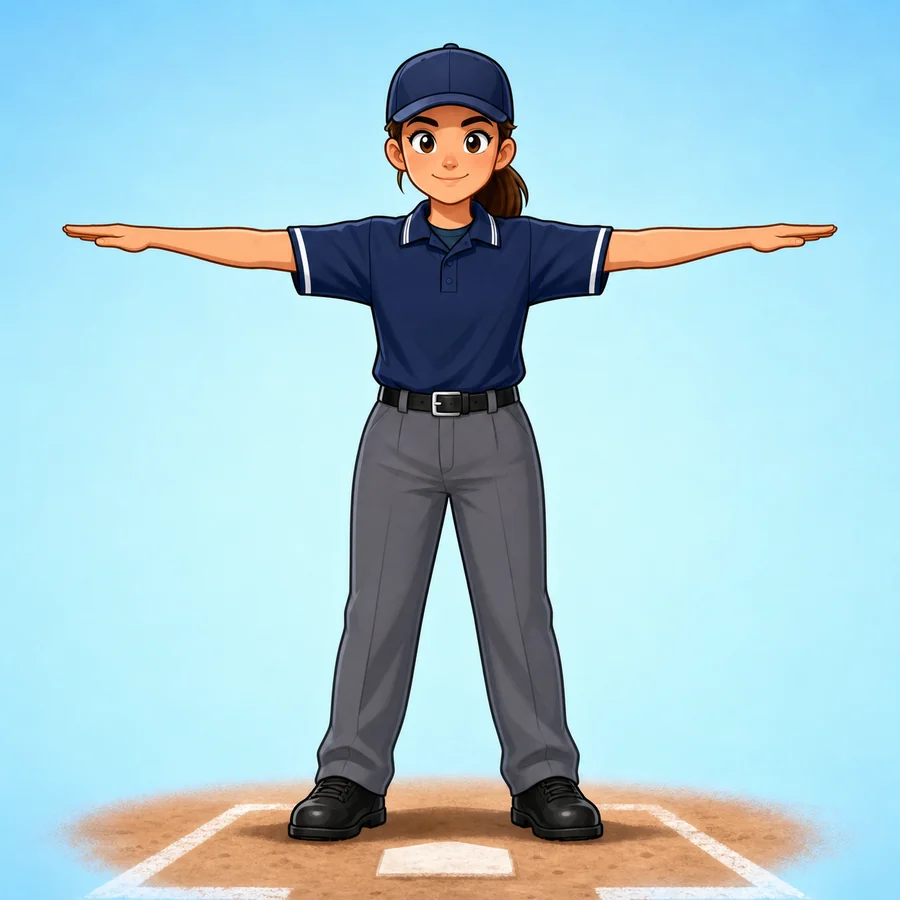
Safe
The runner is not out and may stay at the base reached.
When it happens: Common at first base, on steals, on force plays that are beaten by the runner, and on close tag plays.
What parents should know: Safe means the umpire judged the runner beat the play. It does not always mean the runner was never in danger.
Visual cue: Umpire spreads both arms straight out to the sides at about shoulder height.
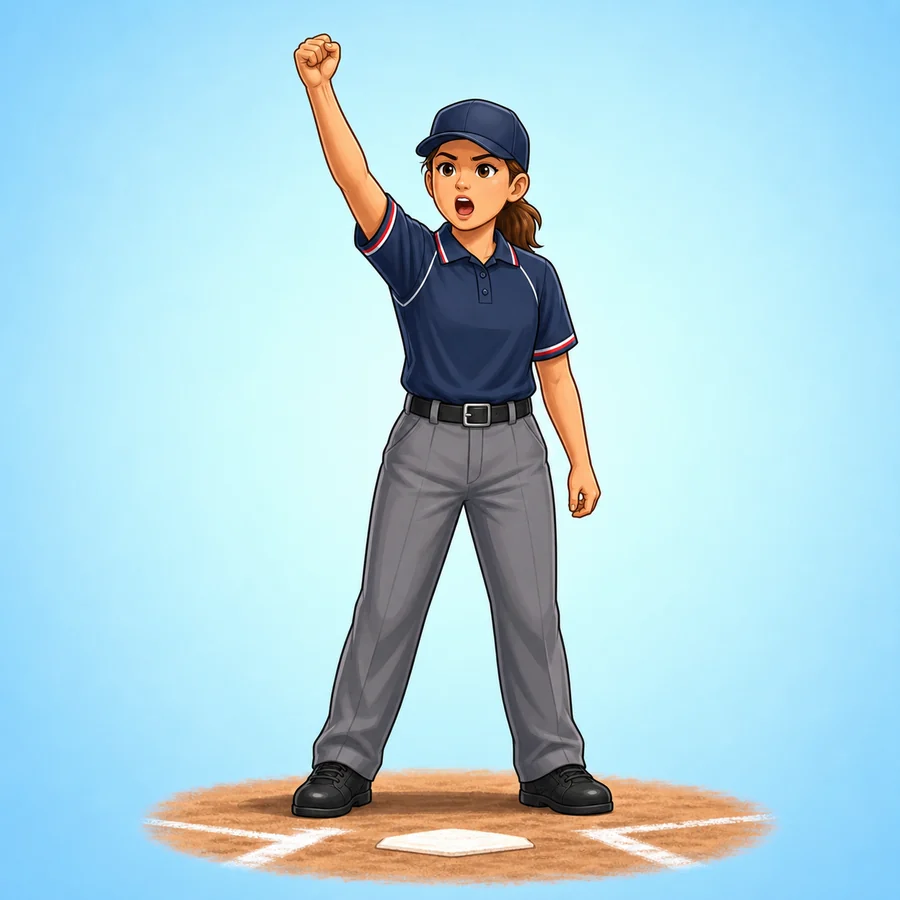
Out
The defense completed the play before the batter or runner reached safely.
When it happens: Called on caught balls, force plays, tags, throws to first, and some baserunning mistakes.
What parents should know: After an out, runners may still need to return, tag up, or stay depending on the play and local rules.
Visual cue: Umpire raises a closed fist, often with a firm verbal out call.
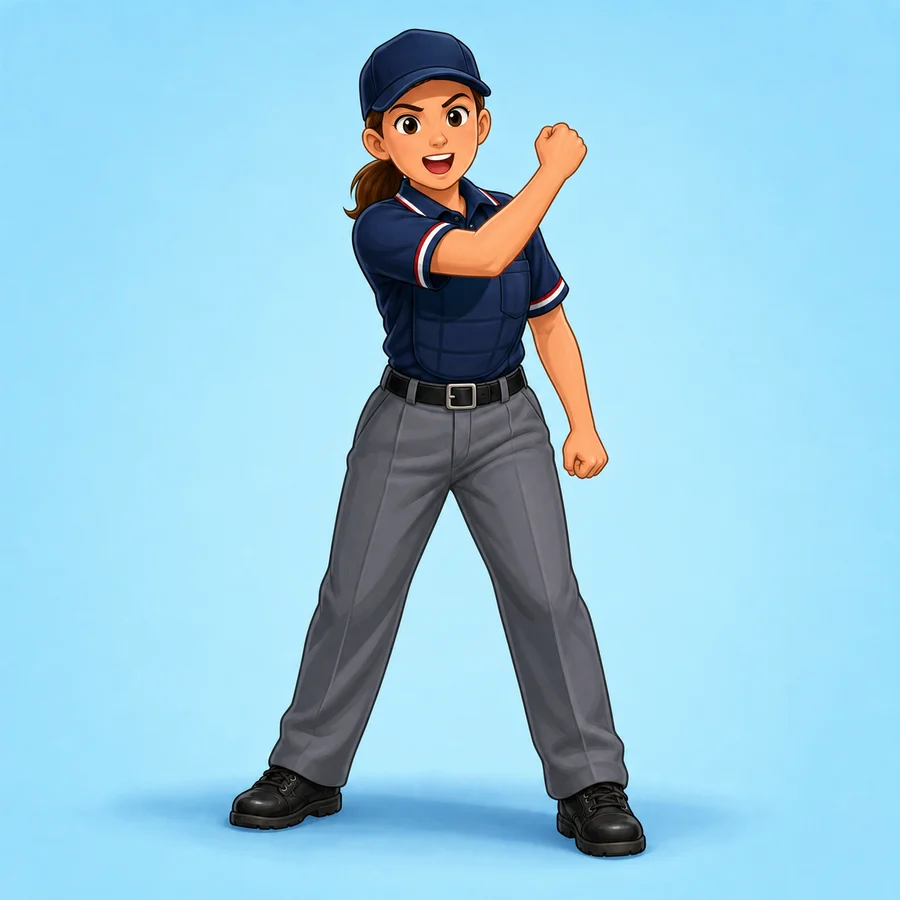
Strike
The pitch counts against the batter, usually because it was in the strike zone, the batter swung and missed, or the batter fouled it with fewer than two strikes.
When it happens: Called during an at-bat after an underhand pitch or swing.
What parents should know: The strike zone can look different with younger pitchers and shorter batters. Listen for the count before assuming what happened.
Visual cue: Plate umpire gives a verbal strike call and usually raises or snaps a fist to the side.
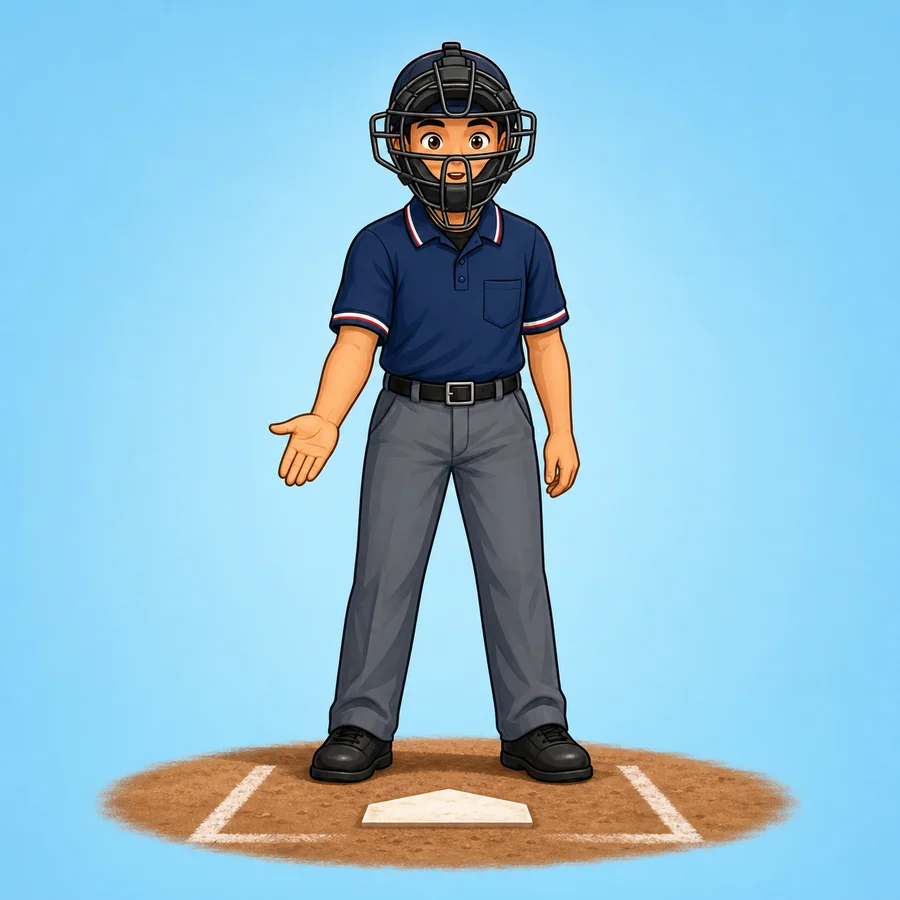
Ball
The pitch did not count as a strike and adds to the batter's ball count.
When it happens: Called when the batter does not swing at a pitch outside the strike zone.
What parents should know: Several balls may lead to a walk, but some youth leagues switch to coach pitch or limit walks.
Visual cue: Plate umpire usually says ball verbally with little or no large arm motion.
Foul Ball
The batted ball is not playable as a fair ball, and live action usually stops.
When it happens: Called when a hit lands, rolls, or settles foul according to the line and rule situation.
What parents should know: Runners usually return to their prior bases unless a local rule or specific play result says otherwise.
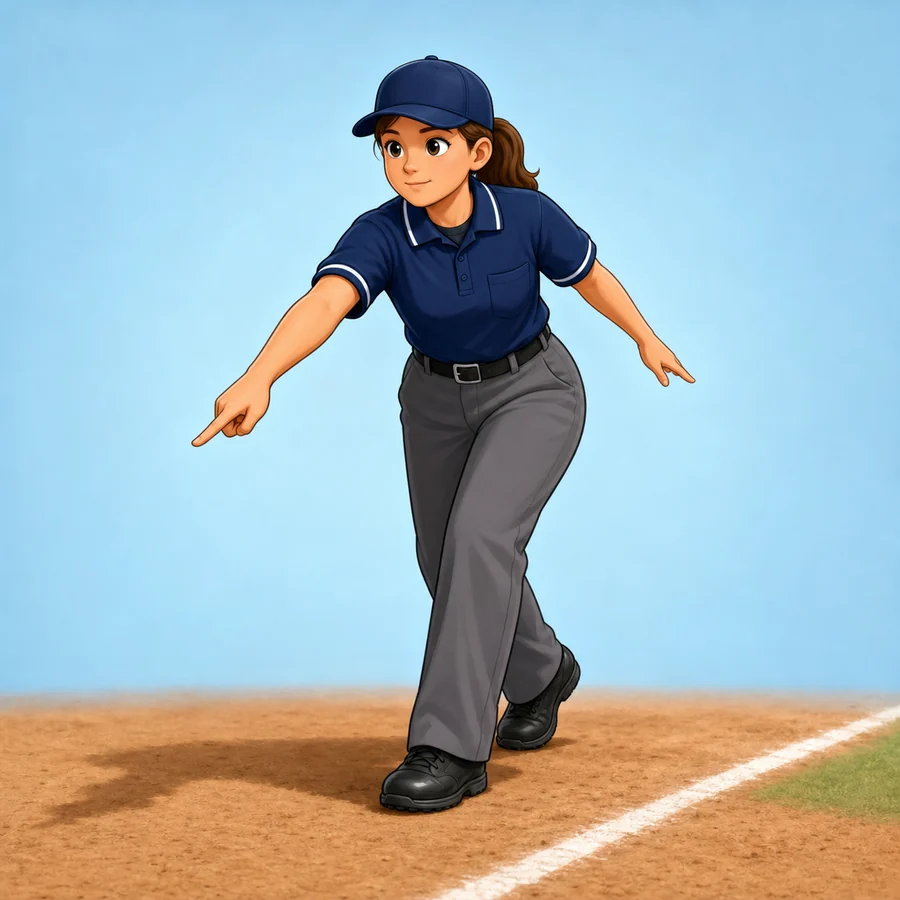
Visual cue: Umpire raises both arms or points toward foul territory while calling foul.
Fair Ball
The ball is live in fair territory and players should keep playing.
When it happens: Used when a grounder, bunt, or fly ball near a line is judged fair.
What parents should know: Parents should keep watching the runners. A fair ball near the line can quickly become extra bases on a youth field.
Visual cue: Umpire points into fair territory, often without a loud call if the ball is clearly fair.
Time
Live play has stopped until the umpire restarts the game.
When it happens: Called for coach visits, player safety, equipment issues, substitutions, or when the ball is no longer live.
What parents should know: Once time is granted, runners normally stop advancing. Wait for play to be put back in before expecting another pitch.
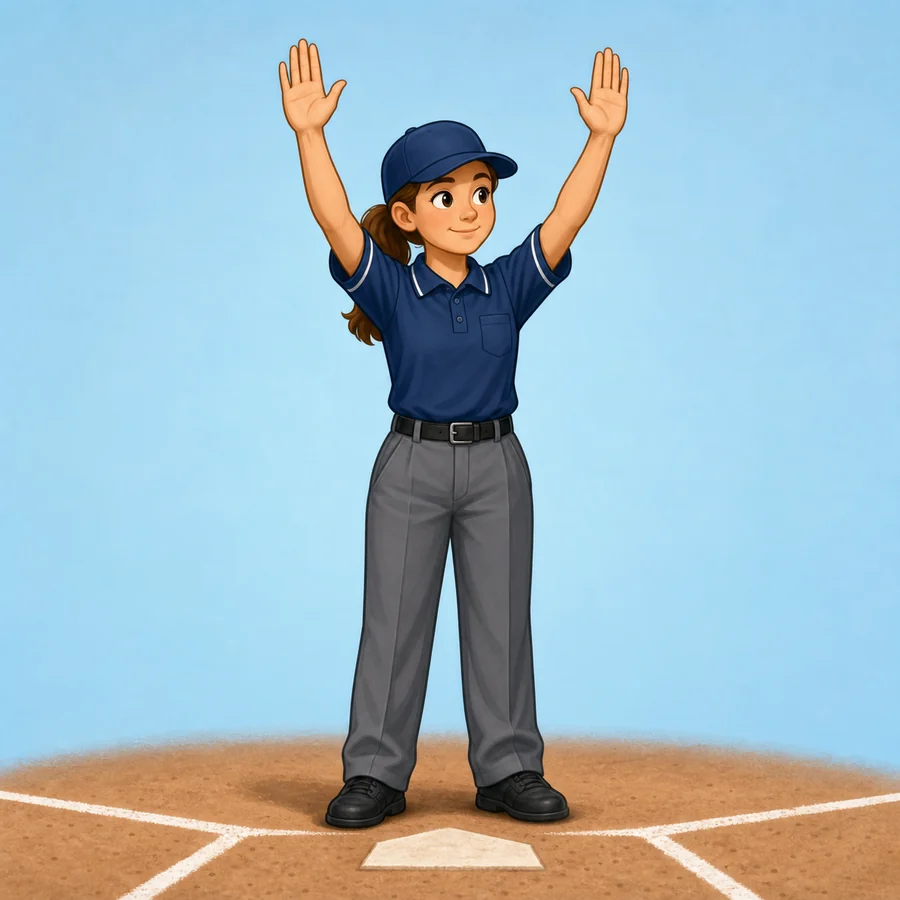
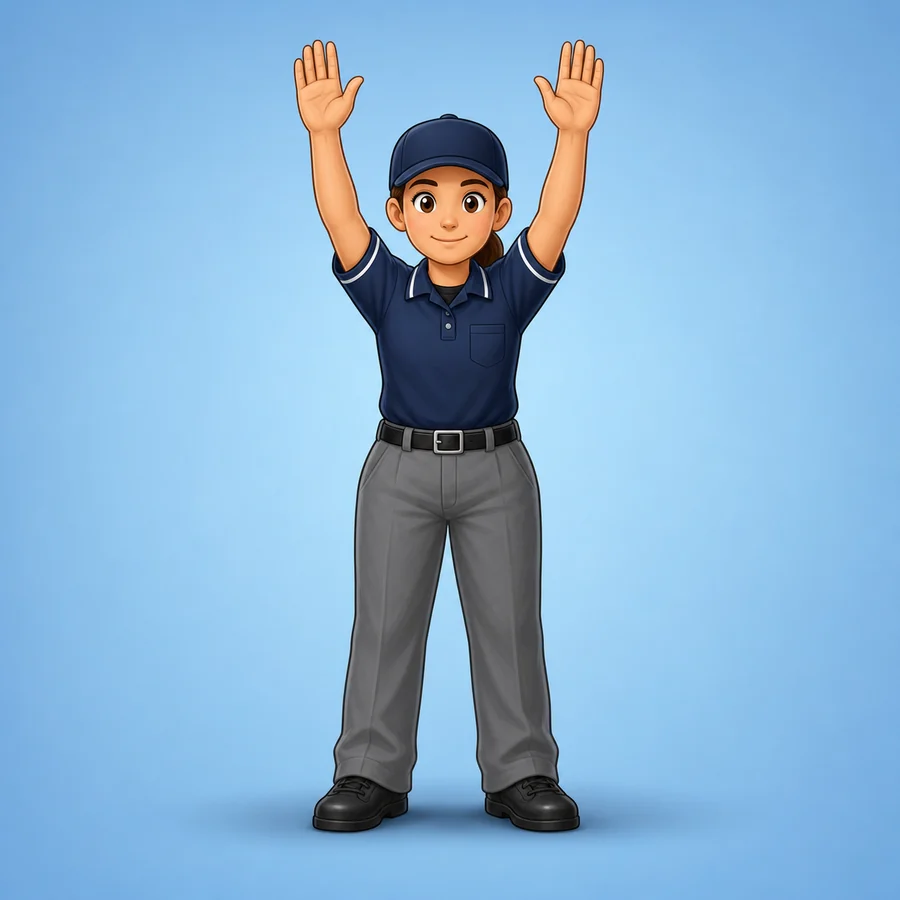
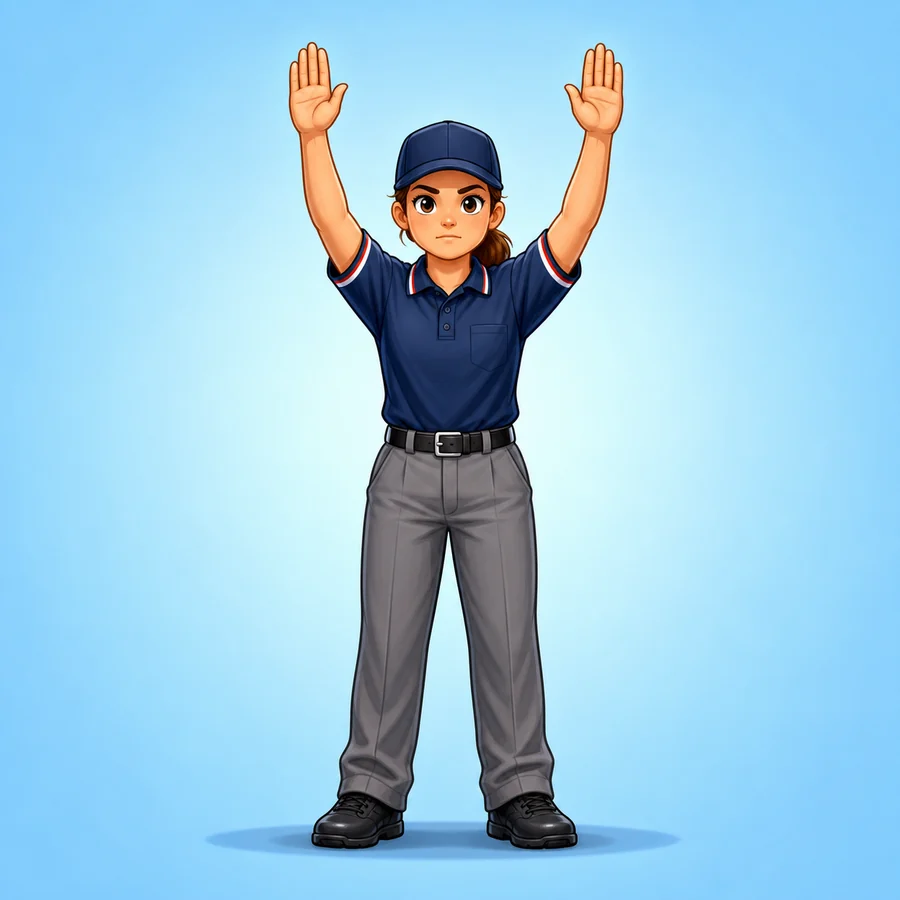
Visual cue: Umpire raises both hands overhead or holds both arms up to stop play.
Play Ball
The game is ready to restart and the ball is live again.
When it happens: Used before a pitch after time, between innings, or after the defense and batter are set.
What parents should know: This tells players and coaches the pause is over. In youth games, the umpire may also use extra verbal reminders.
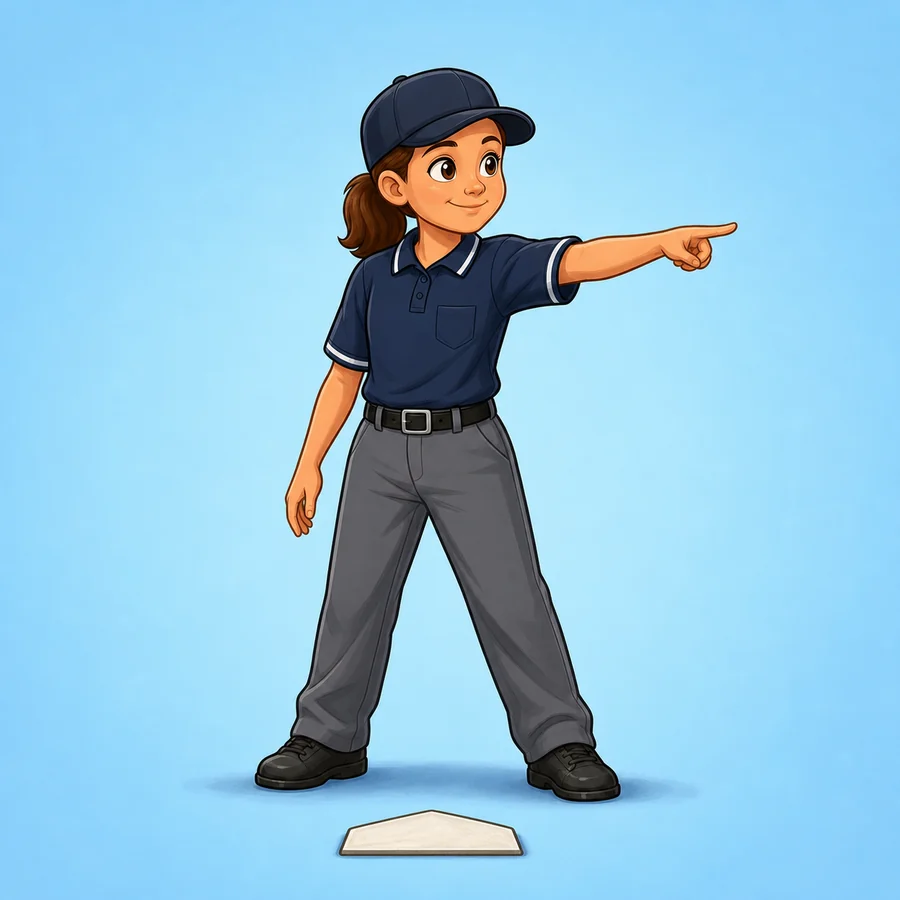
Visual cue: Umpire points toward the pitcher or plate area and announces play.
Dead Ball
The ball is no longer live because the umpire stopped action or the rules ended the play.
When it happens: Can happen after certain foul balls, hit batters, interference, lodged balls, or safety stoppages.
What parents should know: Dead-ball situations can affect where runners are placed, and those placements often depend on local rules.
Visual cue: Umpire raises both hands and calls dead ball or time to stop action.
The Count
The umpire is reporting the current balls and strikes on the batter.
When it happens: Often given after several pitches or when a coach, catcher, batter, or parent needs clarity.
What parents should know: The count explains why the batter walks, keeps batting, or is called out on strikes.
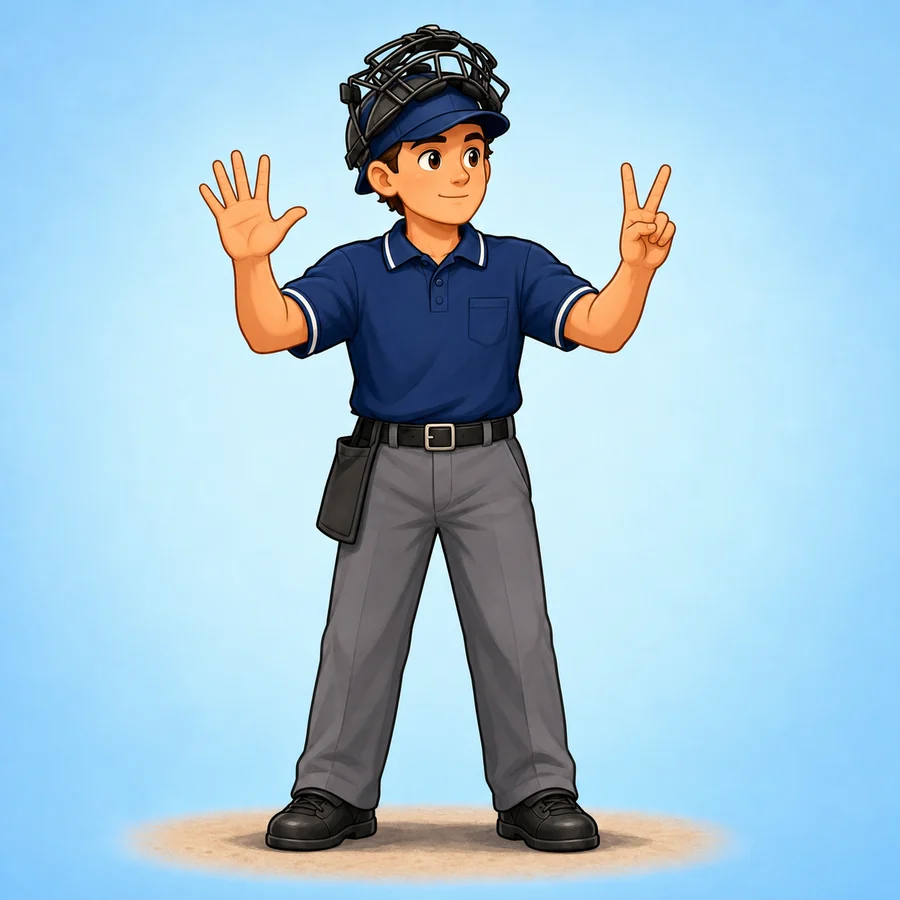
Visual cue: Umpire may hold up fingers or announce the count aloud, such as two balls and one strike.
Delayed Dead Ball
The umpire has seen something that may be enforced after the play finishes instead of stopping action immediately.
When it happens: Sometimes used for obstruction or other situations where stopping play right away would change the result.
What parents should know: Parents may see the umpire signal during live action and then explain the placement after the play ends.
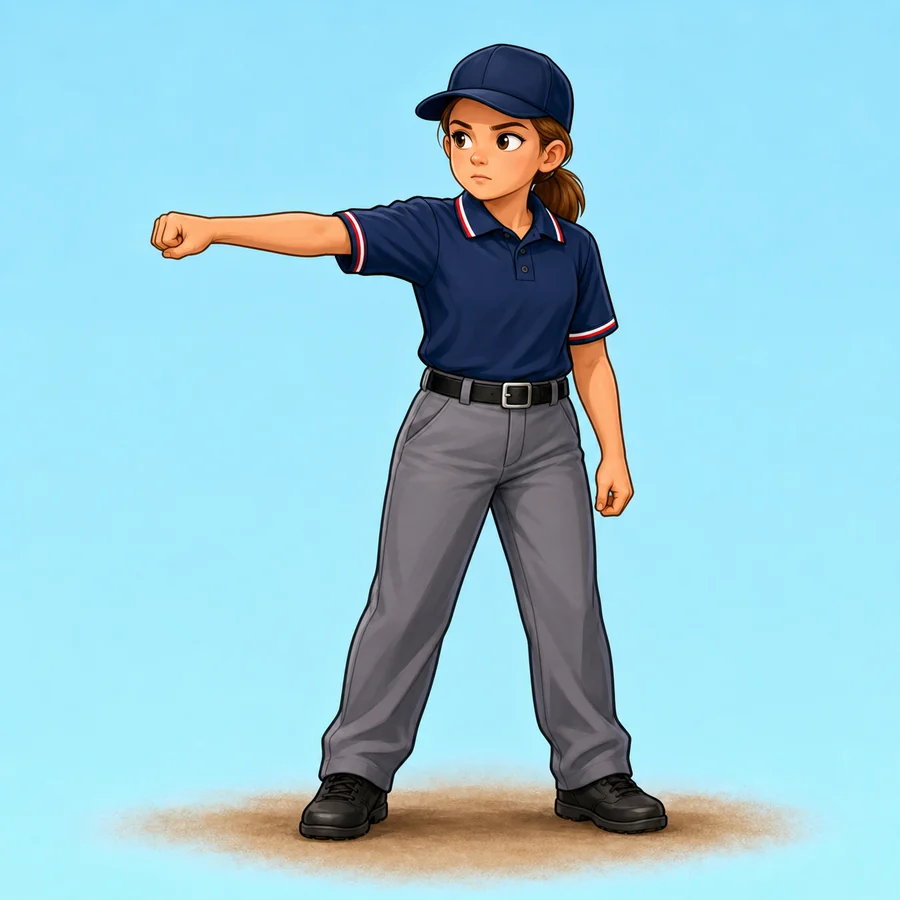
Visual cue: Umpire extends one arm out to the side with a closed fist or held signal, depending on local mechanics.
Runner Left Early
A runner may have left the base too soon before the pitch reached the batter or before the league's allowed release point.
When it happens: Called in leagues with no-leading-off or restricted stealing rules.
What parents should know: This call is very youth-specific. It often explains why an apparent stolen base is sent back or the runner is called out.
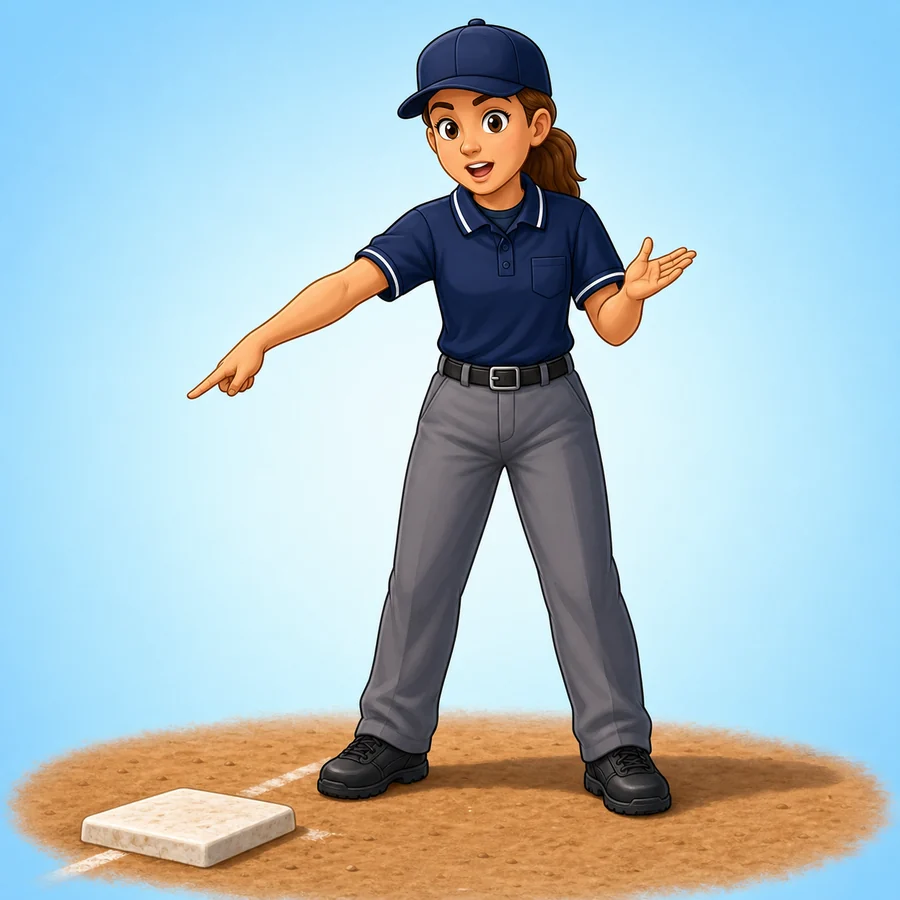
Visual cue: Umpire points toward the runner or base area and gives a clear verbal explanation after stopping or finishing the play.