Referee Signals explained in plain English for parents learning Soccer.
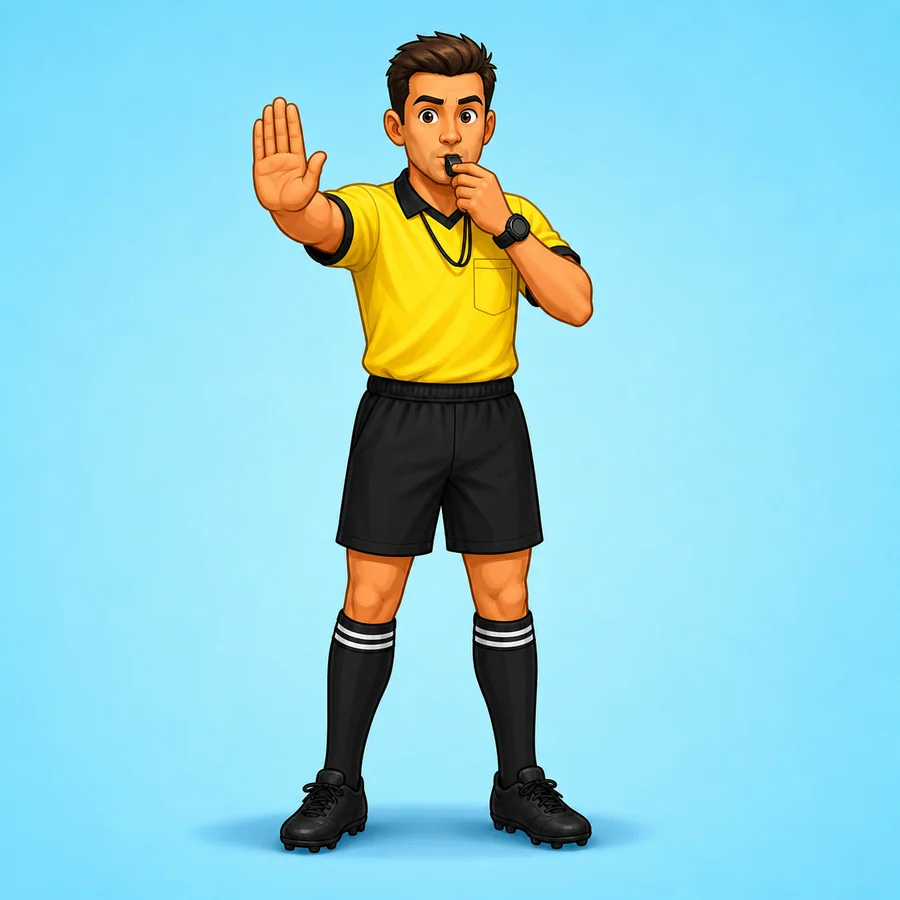
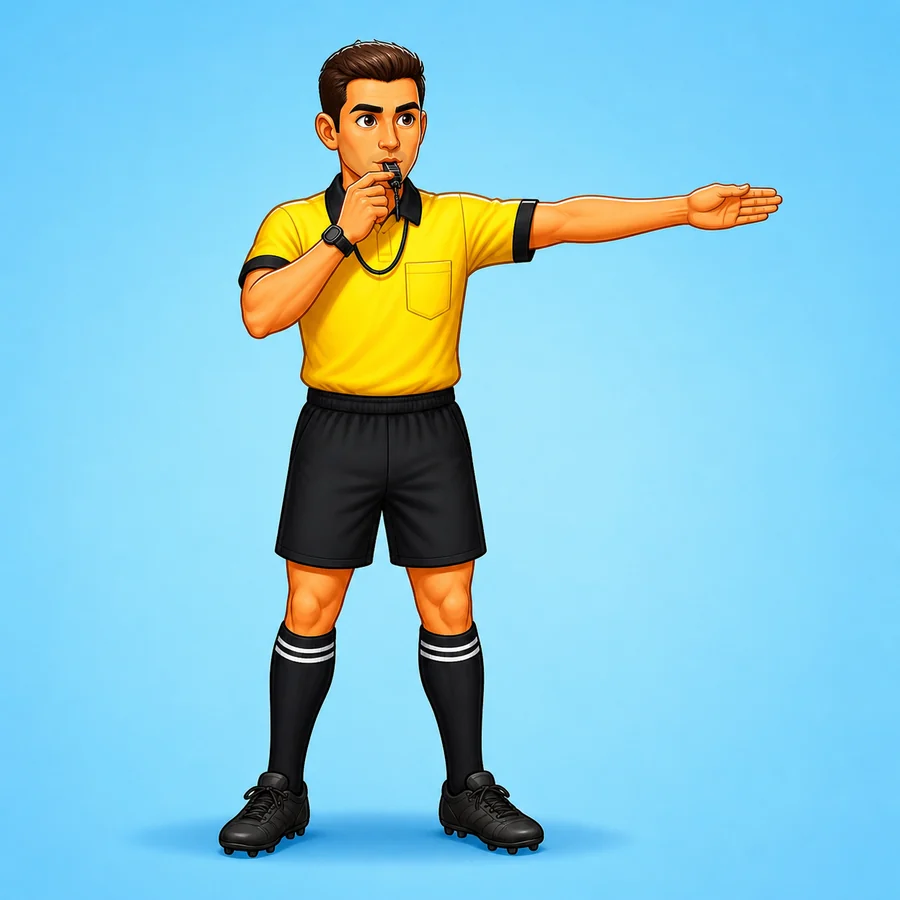
Whistle To Stop Play
The referee has stopped live play for a foul, out-of-play decision, goal, injury, substitution, or another restart.
When it happens: Any time the referee needs players to stop and wait for the next decision or restart.
What parents should know: The whistle alone does not always explain the call. Look next for the direction point, restart location, or verbal explanation.
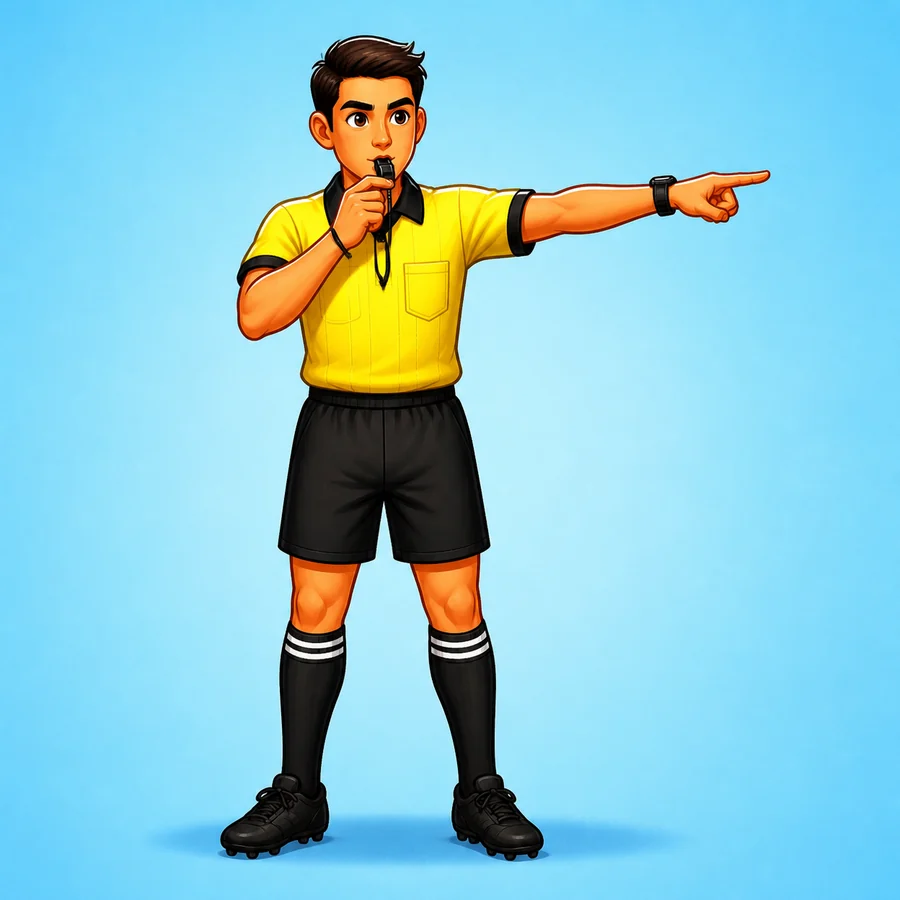
Visual cue: Referee blows the whistle and uses the next arm signal to show the decision.
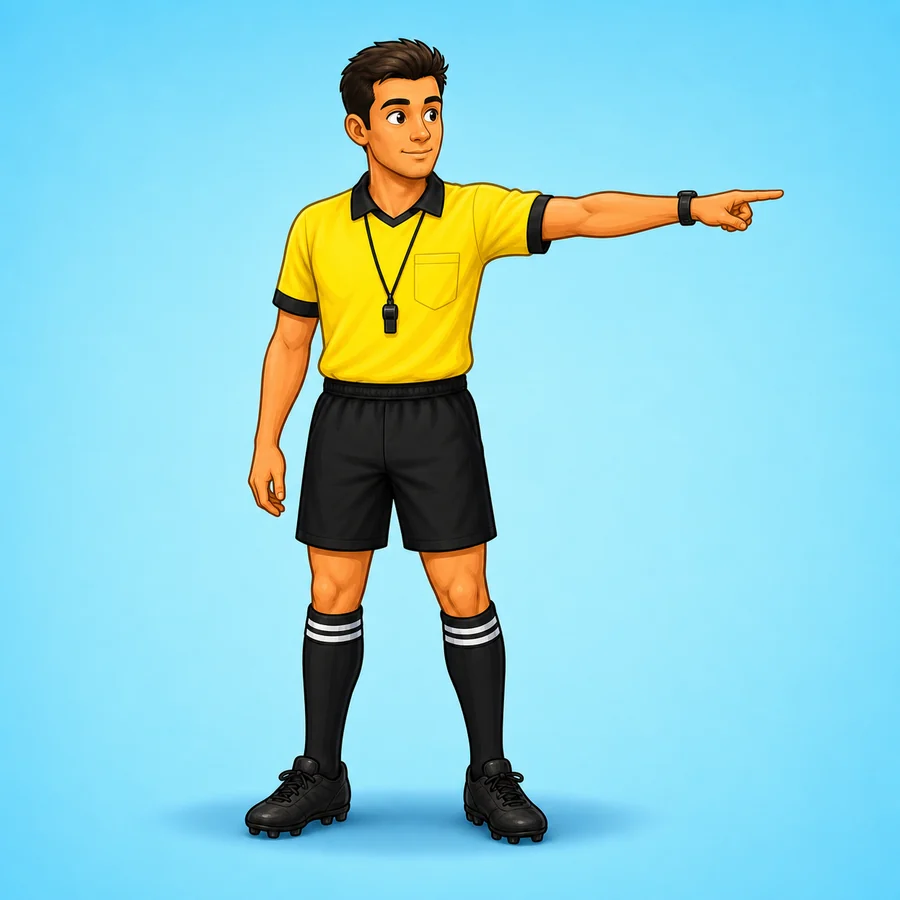
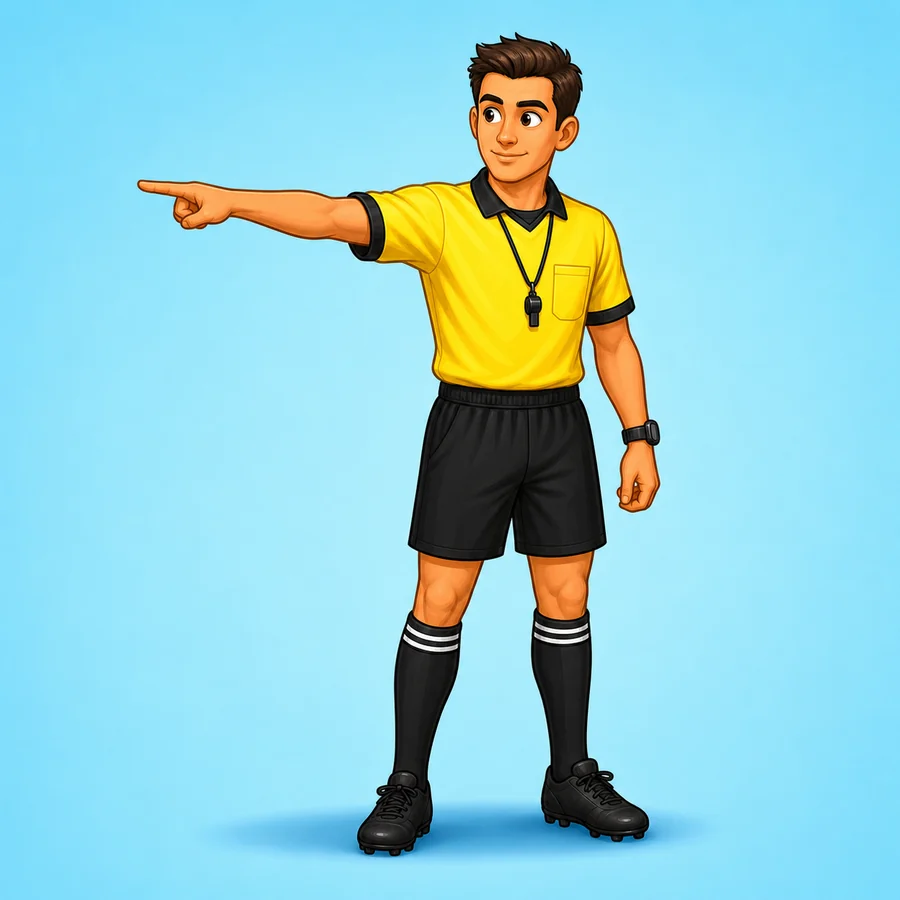
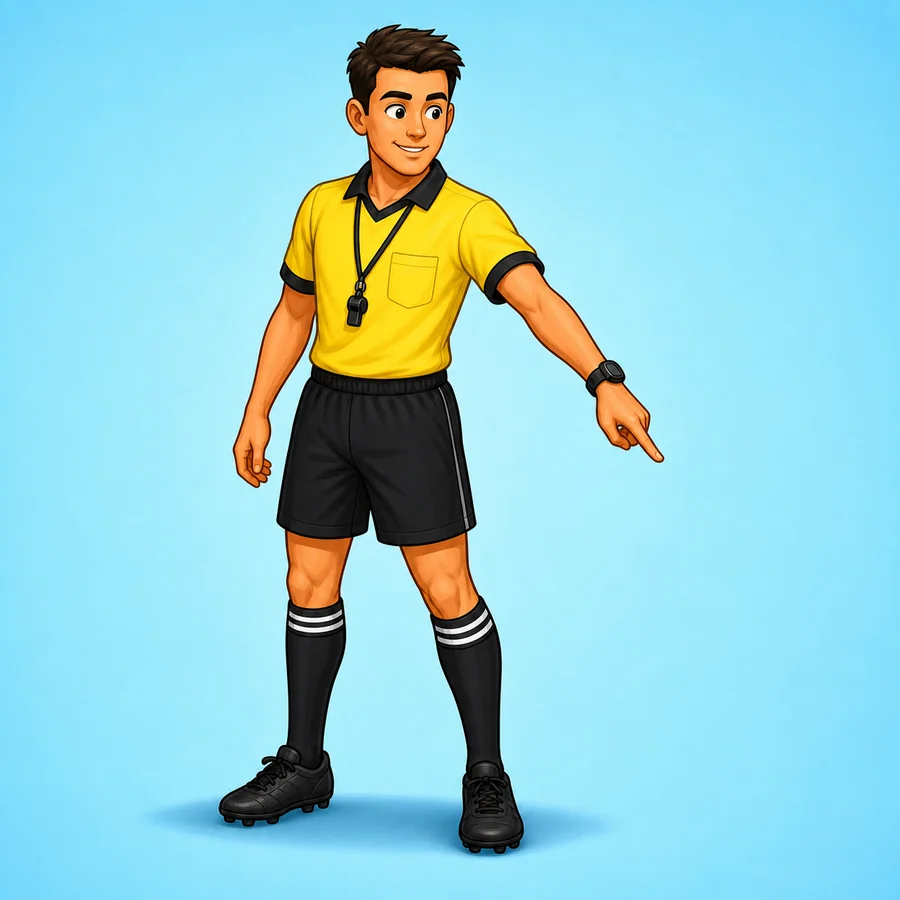
Direction Of The Restart
The referee is showing which team gets the ball next and which way play will restart.
When it happens: After throw-ins, free kicks, fouls, offside calls, goal kicks, corner kicks, or other stoppages.
What parents should know: This is often the simplest signal for parents: the team attacking the direction of the point usually gets the restart.
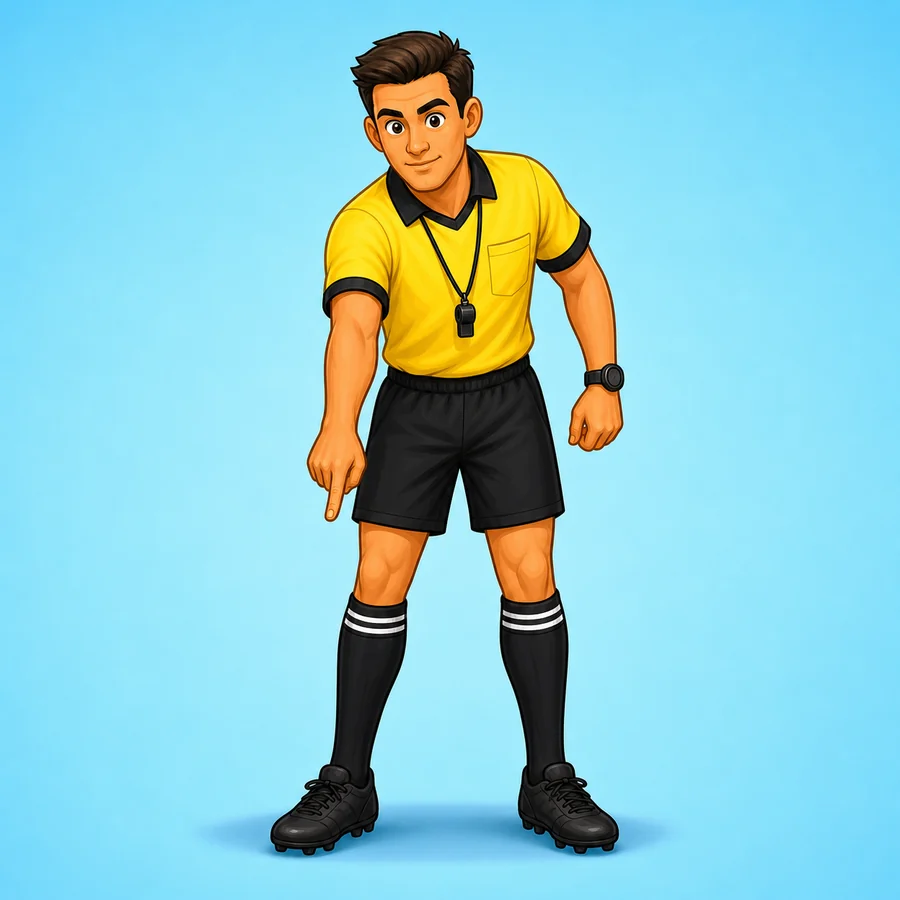
Visual cue: Referee points one arm in the direction the awarded team will attack.
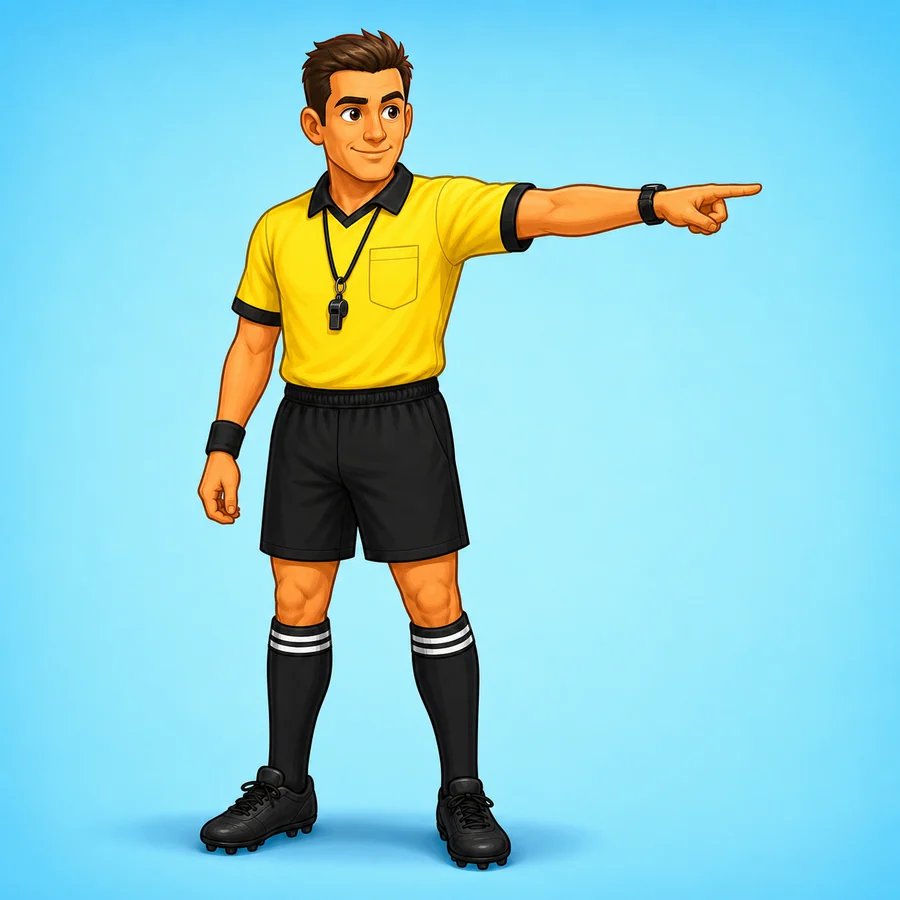
Throw-In Direction
The ball crossed the sideline, and the referee is awarding a throw-in to one team.
When it happens: When the whole ball goes out over a touchline or sideline.
What parents should know: If the referee points one way and the assistant referee points another, wait for the center referee's final decision.
Visual cue: Referee points along the sideline toward the attacking direction for the team taking the throw-in.
Goal Kick
The attacking team last touched the ball before it crossed the defending team's goal line without a goal, so the defending team restarts.
When it happens: After a missed shot, deflection off an attacker, or ball over the end line by the attacking team.
What parents should know: Goal kicks often explain why defenders suddenly relax and move the ball to the goal area instead of taking a throw-in.
Visual cue: Referee points toward the defending team's goal area or goal box.
Corner Kick
The defending team last touched the ball before it crossed its own goal line without a goal, so the attacking team restarts from the corner.
When it happens: After a defender blocks, deflects, or kicks the ball over the end line.
What parents should know: A corner kick is a scoring chance, not a penalty. Players will gather near the goal because the ball starts close to the net.
Visual cue: Referee points toward the corner where the kick should be taken.
Goal Awarded
The referee has decided the ball legally crossed the goal line and the goal counts.
When it happens: After a shot, deflection, or loose ball fully crosses the line inside the goal.
What parents should know: For close plays, wait for the referee's signal. A ball near the line is not a goal unless the whole ball crossed.
Visual cue: Referee points toward midfield for the kickoff restart after the goal.
Direct Free Kick
A team gets a free kick after a foul, and the kick may be taken toward goal under the local rules in use.
When it happens: After many contact fouls such as tripping, pushing, holding, or careless challenges.
What parents should know: In youth games, the practical takeaway is that the fouled team gets space and a restart from near the foul.
Visual cue: Referee points one arm in the direction of the awarded team's attack.
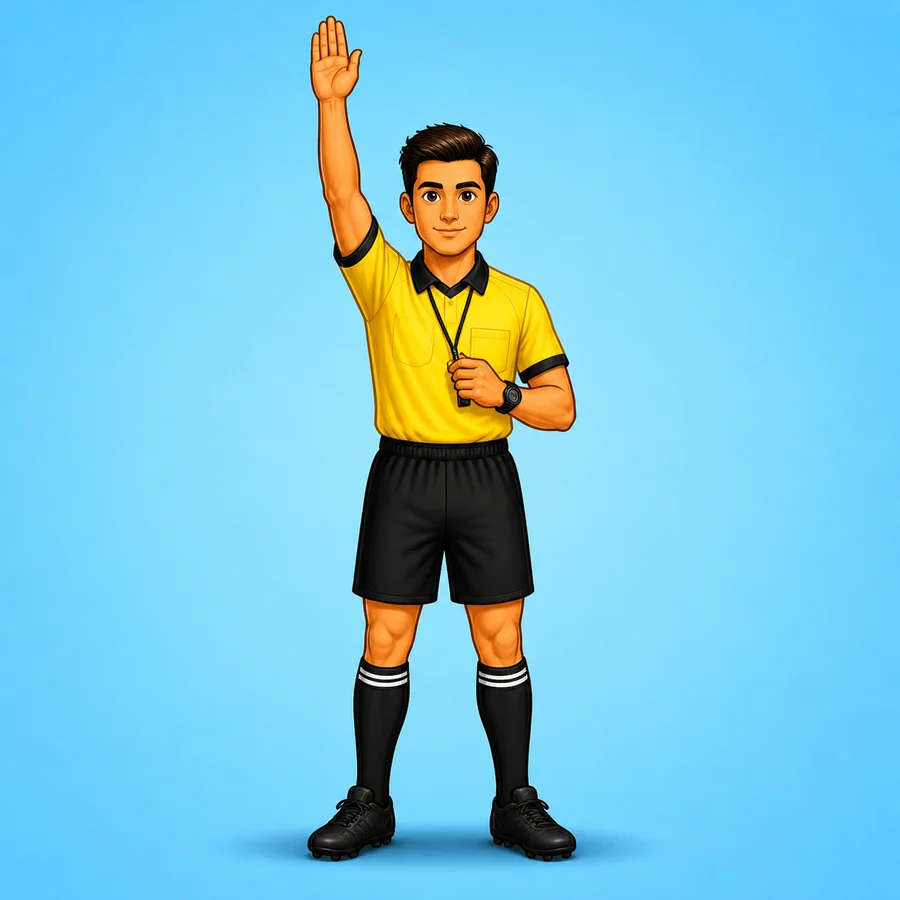
Indirect Free Kick
A team gets a free kick that usually must touch another player before a goal can count directly from the kick.
When it happens: After some technical violations or goalkeeper-related calls, depending on the league and age group.
What parents should know: Parents do not need to memorize every indirect-kick situation. Watch for the raised arm and listen for referee or coach instructions.
Visual cue: Referee raises one arm straight overhead and keeps it up until the ball touches another player or the play changes.
Penalty Kick
A foul by the defending team happened inside its own penalty area, so the attacking team gets a penalty kick.
When it happens: After a foul in the box where the league uses penalty kicks.
What parents should know: This call can feel big, but it is simply the restart for a defensive foul in a high-danger area. Exact setup rules vary by age group.
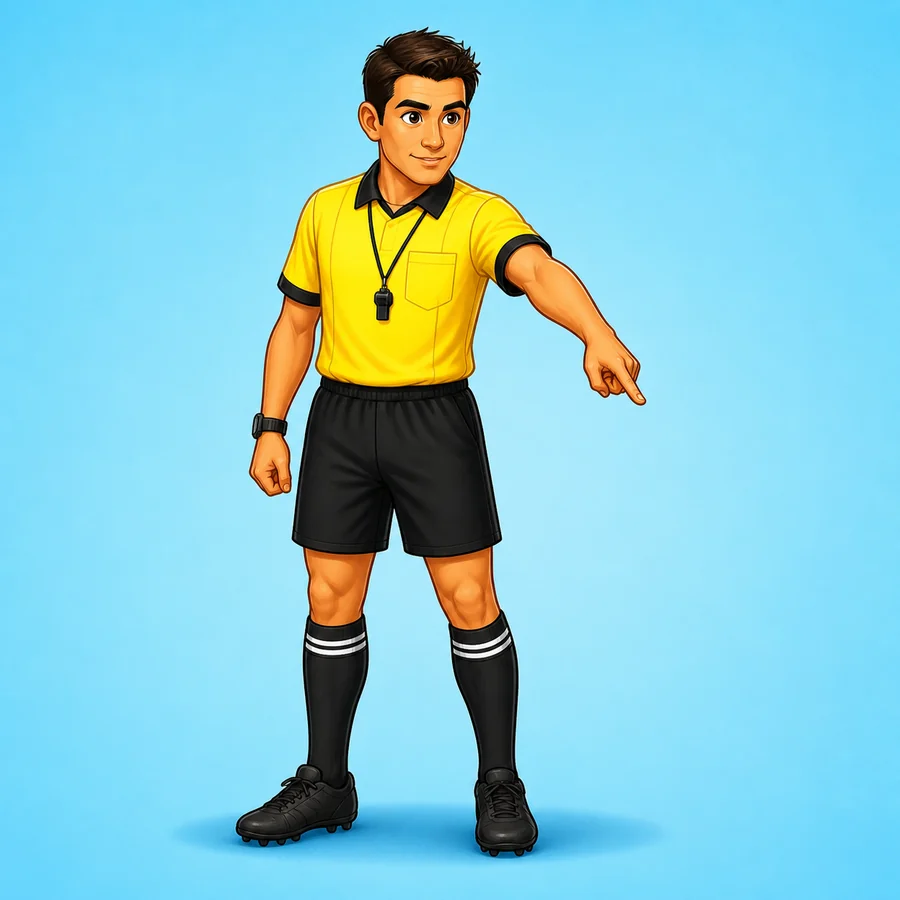
Visual cue: Referee points clearly to the penalty spot.
Offside
An attacking player gained an unfair head start near goal and became involved in play after a teammate played the ball.
When it happens: When a pass is made to a player who was in an offside position and then participates in the play.
What parents should know: The key moment is usually when the pass was made, not when the player finally touched the ball. Some youth divisions do not use offside.
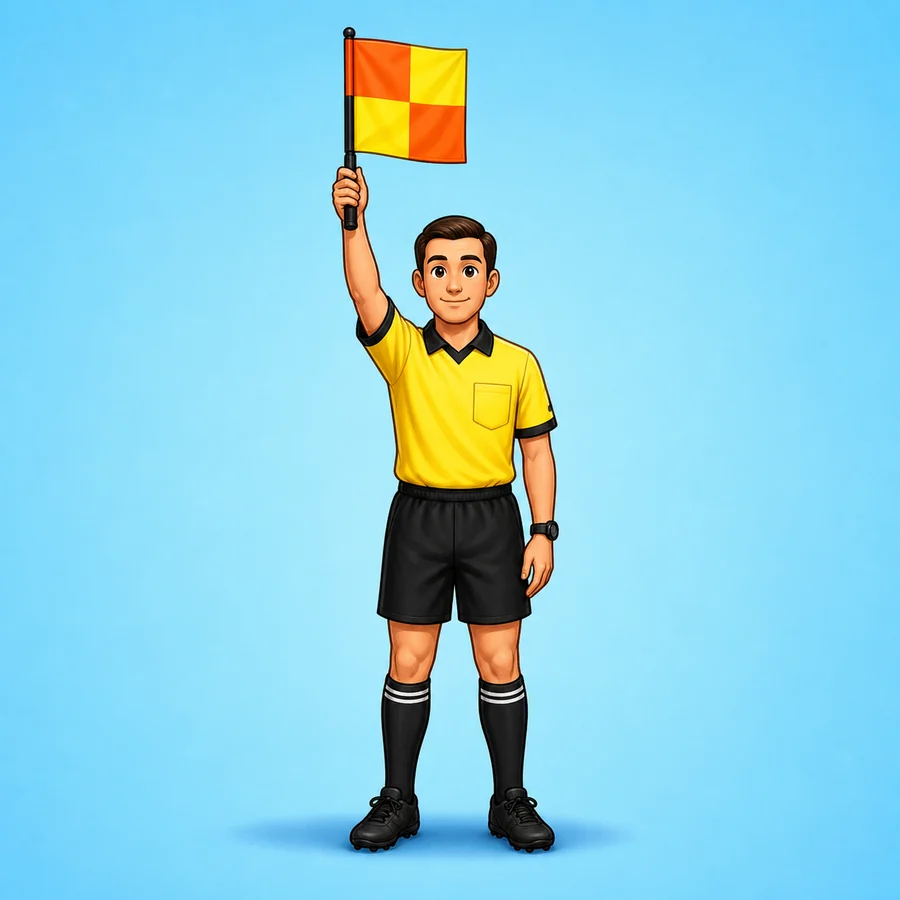
Visual cue: Assistant referee raises the flag straight up; after acknowledgment, the flag angle may show near, middle, or far side.
Foul Called
The referee judged that a player used unfair or unsafe contact or handling and has stopped play.
When it happens: After trips, pushes, holds, careless charges, or illegal hand/arm contact.
What parents should know: Soccer has normal contact, so the whistle means the referee judged the contact crossed the line for that game and age group.
Visual cue: Referee blows the whistle and points the restart direction, sometimes adding a verbal explanation.
Advantage Or Play On
The referee saw a foul or possible foul but is allowing play to continue because the fouled team still has a useful attack.
When it happens: When stopping play would take away a better chance for the team that was fouled.
What parents should know: If the referee calls play on, the contact was not necessarily ignored. The referee may be letting the team keep the benefit.
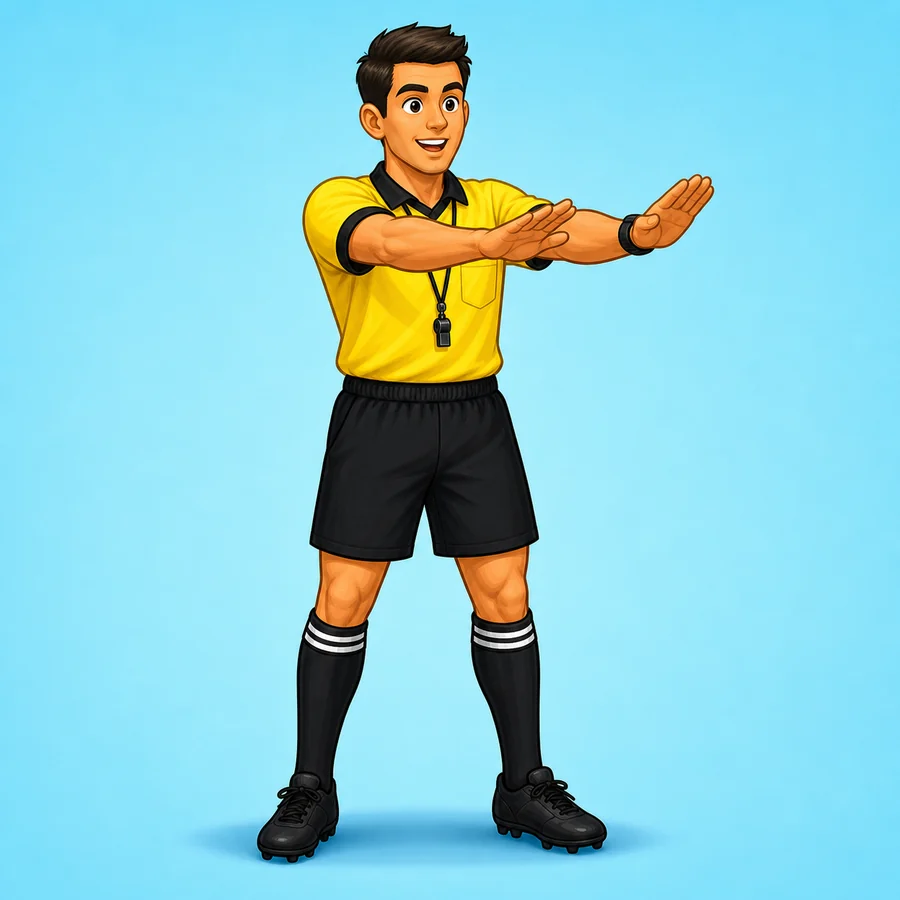
Visual cue: Referee sweeps both arms forward or calls play on while motioning for play to continue.
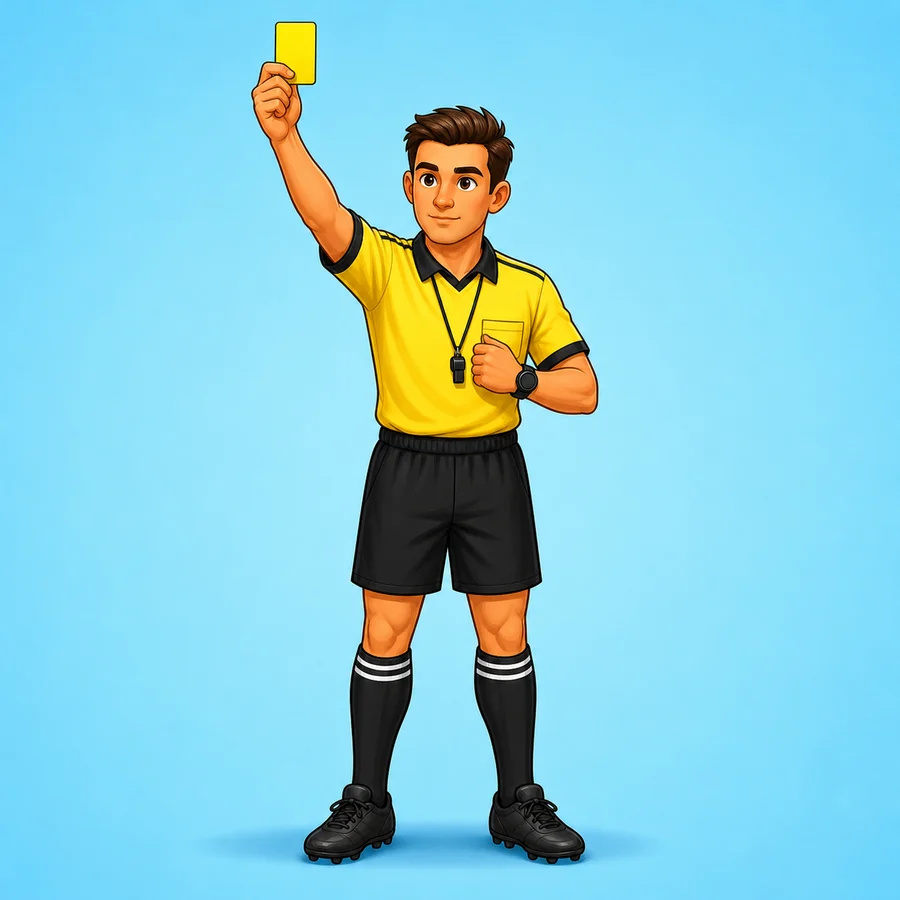
Yellow Card
A caution has been given for behavior or a foul serious enough to formally warn a player or coach.
When it happens: For repeated fouls, unsafe play, dissent, delaying restarts, or unsporting behavior where cards are used.
What parents should know: Many younger leagues avoid or modify cards and may handle issues through coaches instead. The meaning is a warning, not an ejection by itself.
Visual cue: Referee holds a yellow card overhead.
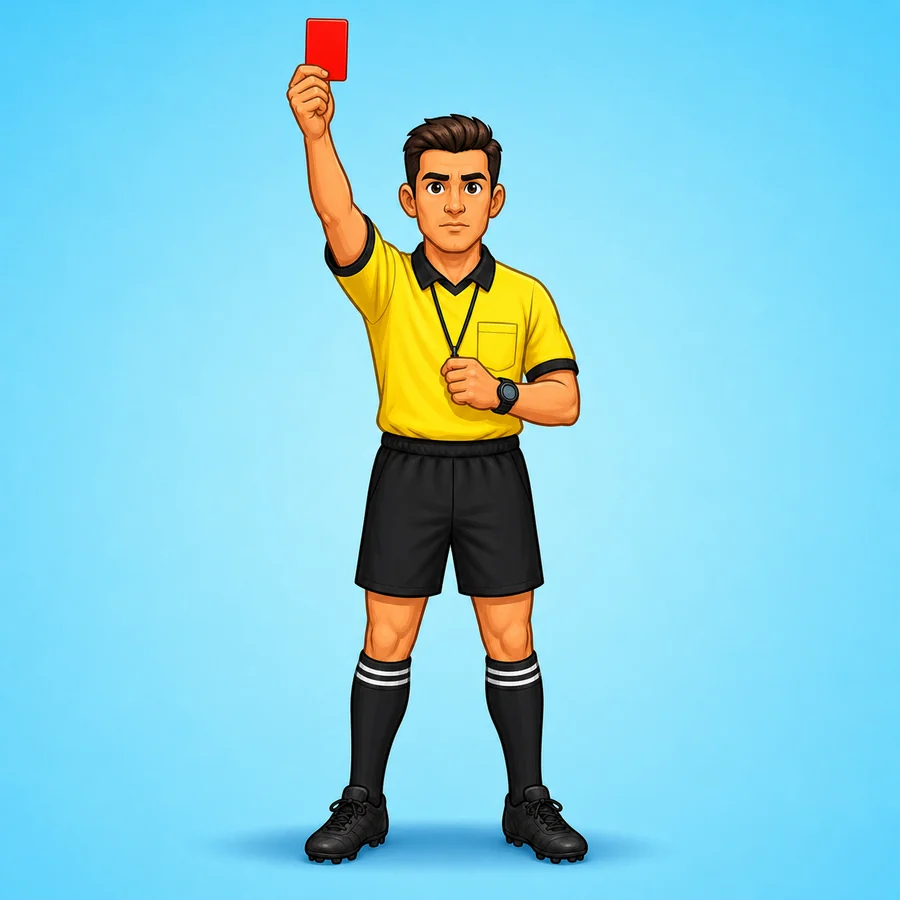
Red Card
A send-off has been given for serious misconduct where cards are used, and the person must leave the game area according to league rules.
When it happens: For very serious foul play, violent conduct, or other major misconduct in leagues that use cards.
What parents should know: Red cards are uncommon in many youth settings. Local rules decide player replacement and team strength after a send-off.
Visual cue: Referee holds a red card overhead.
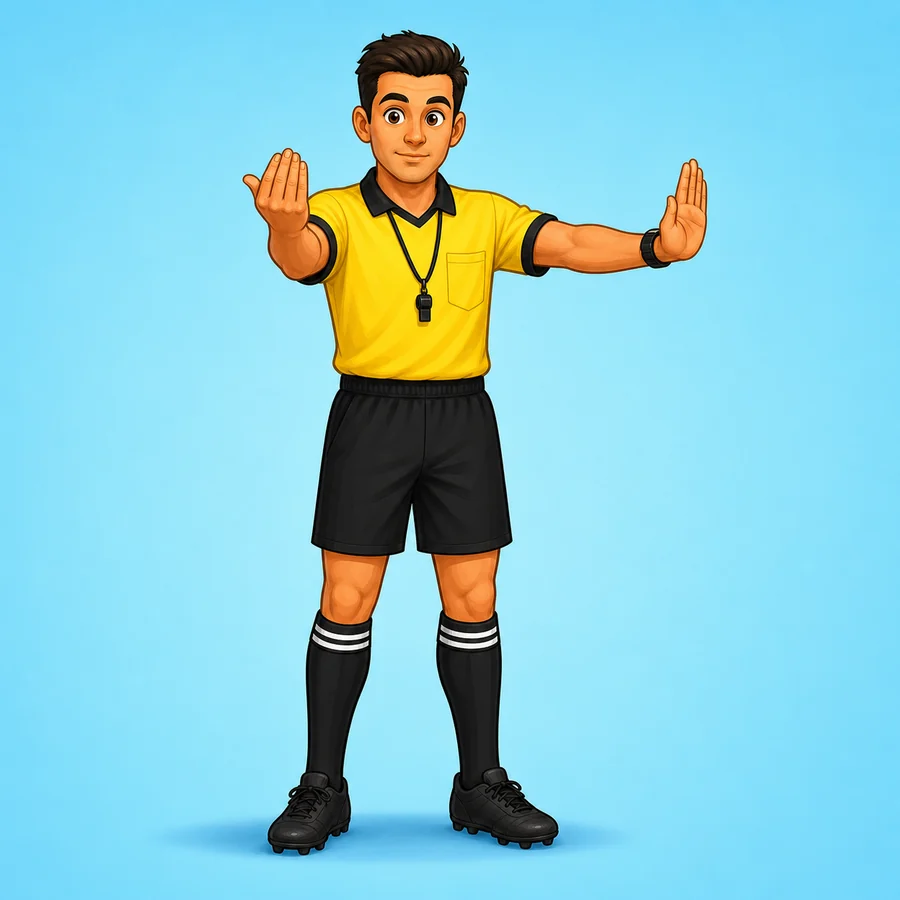
Substitution
The referee is allowing players to enter or leave the field.
When it happens: At an allowed substitution moment, such as a stoppage, quarter break, or other league-approved window.
What parents should know: Youth substitutions often support participation and rest, not only strategy. Procedures vary by league and age group.
Visual cue: Referee beckons substitutes onto the field or holds play while players exchange.
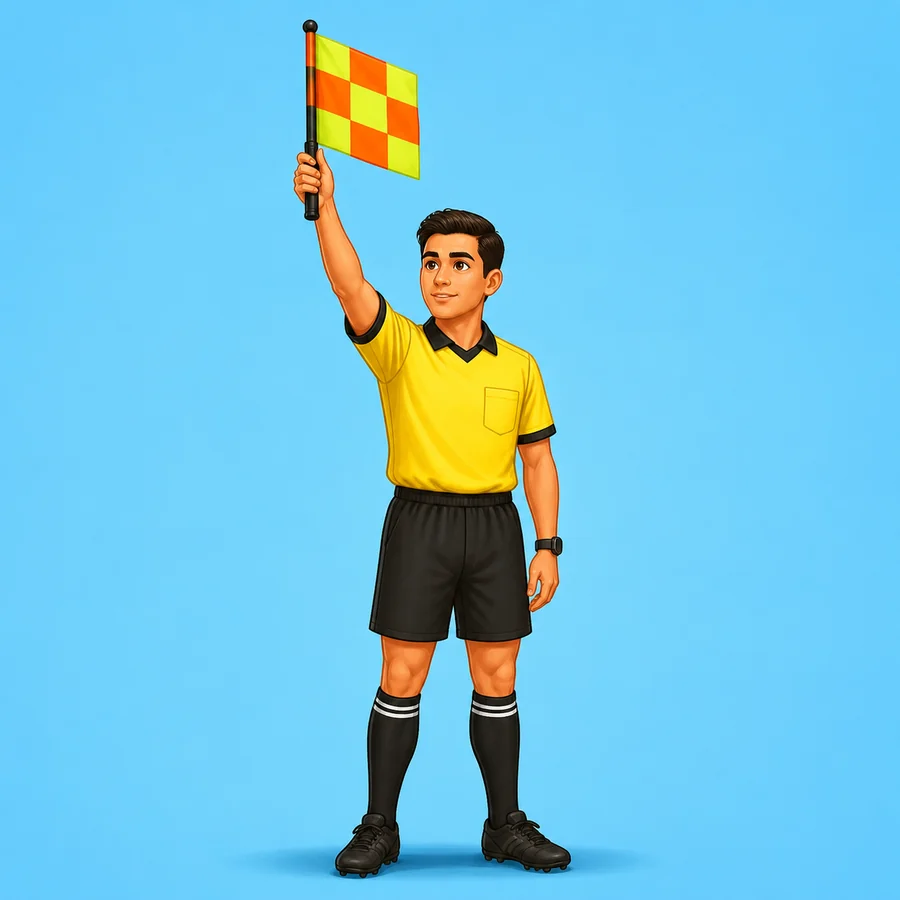
Assistant Referee Flag Raised
The assistant referee is signaling that the center referee should look over for help with a decision.
When it happens: For offside, ball out of play, fouls near the assistant, substitution requests, or direction help.
What parents should know: The raised flag is not final until the center referee accepts or confirms it. Keep watching for the restart direction.
Visual cue: Assistant referee raises the flag straight up or points the flag to show direction after being acknowledged.