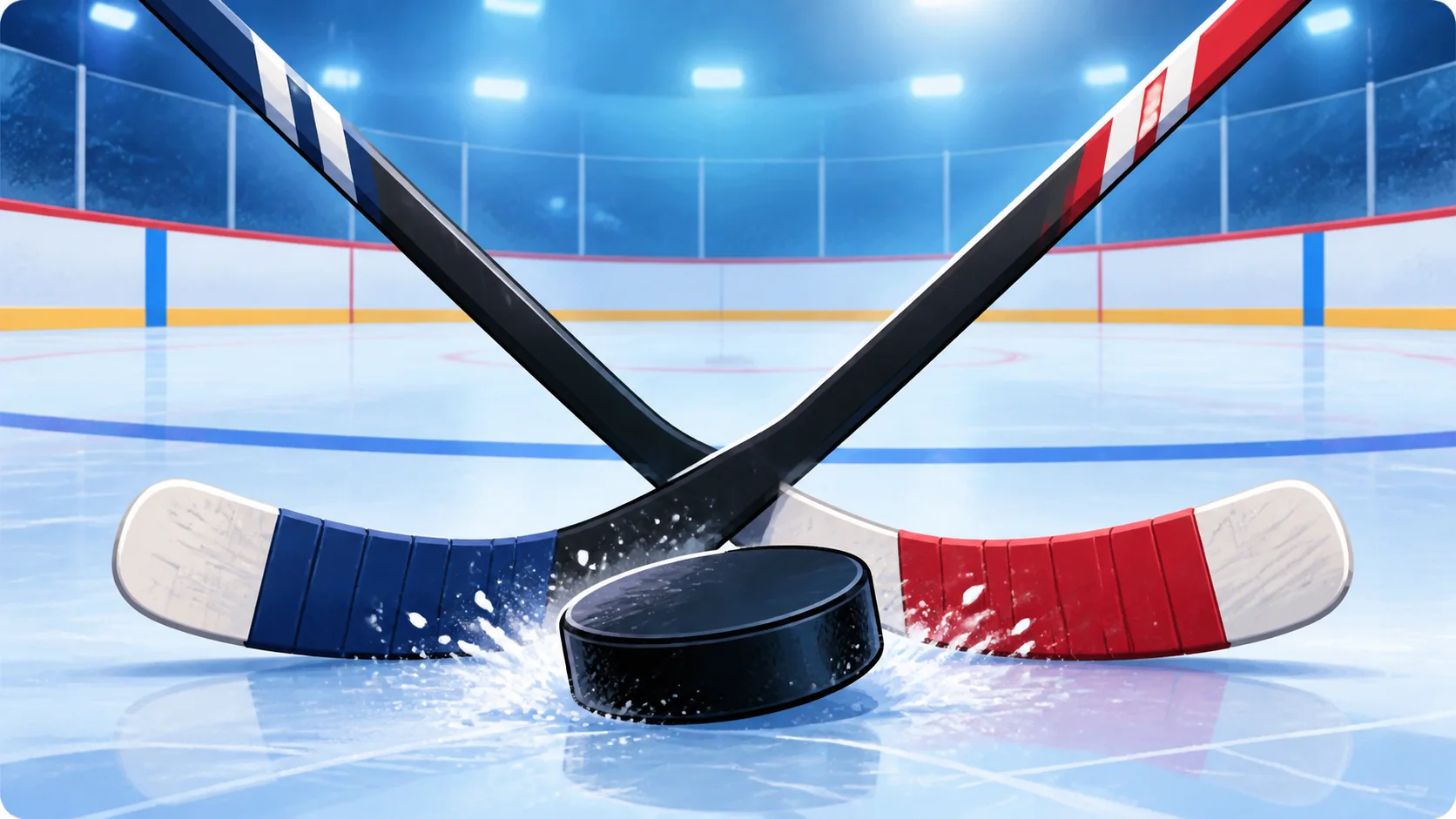
How a youth hockey game flows
Hockey is a fast game where teams skate, pass, shoot, defend, and change lines while trying to score goals.
Most youth ice hockey games are divided into periods. Teams try to move the puck into the offensive zone, take shots on the goalie, and defend their own net. Play stops for goals, saves with a covered puck, offsides, icing, penalties, and other whistles, then restarts with a faceoff.
Parent note: Game flow
Quick facts parents can use right away
The rink is divided into defensive, neutral, and offensive zones, and the blue lines matter a lot.
A goal counts when the puck legally crosses the goal line into the net. Players usually skate in short shifts because hockey is tiring, so line changes are normal. Youth teams may use smaller rosters, cross-ice formats, no-checking rules, running clocks, or modified penalty rules depending on age and league.
Parent note: Quick facts
Offsides and the blue line
Offsides is about who crosses the blue line first: the puck needs to enter the offensive zone before attacking players.
Watch the blue line during a rush. If an attacking skater is already over that line before the puck fully crosses it, the official may whistle offsides and move play back for a faceoff. The easy parent cue is puck first, then players.
Parent note: Offsides
What parents should watch first
Start by watching the puck, the blue lines, the goalie, and the referee after each whistle.
New parents do not need to follow every system or position. Notice which team has the puck, whether it crossed a blue line before attacking, whether a shot reached the goalie, and why the whistle stopped play. The faceoff location often tells you what kind of stoppage just happened.
Parent note: Parent viewing tip
Game-day basics
Youth hockey includes early arrival, gear checks, warmups, short shifts, and frequent teaching moments.
Plan extra time for skates, helmet, pads, stick, jersey, water, and finding the right rink or locker room. Players rotate on and off the ice during line changes, so sitting for a shift is usually part of the game plan. Coaches may adjust lines often so children can learn different situations.
Parent note: Game day
Youth-rule variation notes
Hockey rules change by age group because leagues adjust ice size, contact, penalties, periods, and development goals.
Common variations include cross-ice games for younger players, no body checking, delayed offsides, no-touch icing, shorter periods, running clocks, penalty length changes, mercy rules, goalie rotation, and limits on slap shots or contact. Use this guide as a plain-English starting point and follow your league's rule sheet.
Parent note: Rule variations